
They are now scaling or shutting down their businesses because they can't compete with untaxed grey market gold. India's gold smuggling has increased significantly since the import duty was increased in the Union Budget 2019 in contravention with the broader market expectations of a cut.
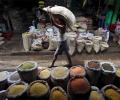
However, the areas under paddy - the biggest cereal grown during the kharif season - continue to be less than last year, mainly due to delayed onset of rains and also on account of shift towards the more lucrative maize.

Recent data from market analytics firm Nielsen shows that the rural market in the country's 630,000-odd villages is pulling down the overall FMCG business.

Consumers during the quarter sold 37.9 tonnes of old gold, which is the highest quarterly sale after September 2016, when old gold sale, or scrap supply, was 39 tonnes.

Officials said good rain in August - though it might not improve acreages much for most crops except urad, moong, and paddy - would help in improving yields in the crops already planted.
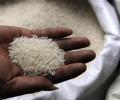
In order to help farmers, the government has increased minimum support price for the last several years. This has made Indian rice uncompetitive for exports.
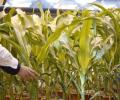
Low rain coupled with the fact that maize prices in the open market have surged from around Rs 15-16 a kg to almost Rs 25 this year have forced farmers to turn to this crop.
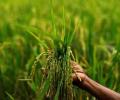
Till July 26, kharif crops have been sown in around 68.87 million hectares, which is 6.43 per cent lower than the area covered during the same period last year.
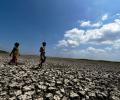
With monsoon rainfall 16% below the long-period average, total sowing area is down by 7% at 56.7 million hectares so far this season.

The high-level panel also asked the government to work towards re-orienting subsidies in a targeted manner from the crop sector to the non-crop sector and redesign the electronic National Agriculture Market.
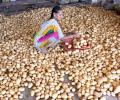
Deficient rains in west, flooding in north play havoc with crop cycles.

The groups, including those associated with the ruling Bharatiya Janata Party's parent organisation the Rashtriya Swayamsevak Sangh, have also threatened a big nationwide agitation if growth of illegal GM crops isn't checked.

With satisfactory progress of monsoon rainfalls prompting farmers to bring in additional area under basmati sowing, prices are set to fall lower going forward.

Large retailers are allegedly importing apparel made of Chinese fabric from Bangladesh at nil duty, under our free trade agreement with the latter country. However, the same agreement does not permit duty-free export from here.
India consumes around 24-25 million tonnes of pulses, but sowing trends show this year production is expected to be lower compared to last year.
Meanwhile, retail jewellery sales in India have declined by 50 per cent since gold price started its uptrend nearly two weeks. Buyers deferred their fresh purchase amid expectations of a correction in gold prices from the current high level.

The committee has been tasked to come up with policy measures to boost agriculture exports, raise growth in food processing, attract investments in modern market infrastructure, value chains and logistics.
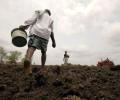
Till June 30, the southwest monsoon was 33 per cent lower than normal, which is among the worst in the last five years, with 28 of the 36 meteorological divisions recording deficient rain.
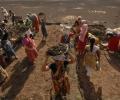
Around 40 per cent of the country is staring at drought-like conditions ahead of the monsoon as water levels have receded sharply.

It would involve constructing over 125,000 kilometres of roads and would form part of the third phase of the Pradhan Mantri Gram Sadak Yojana.
 © 2026 Rediff.com - Investor Information - Advertise with us - Disclaimer - Privacy Policy - Sitemap - Feedback - About us - Terms of use - Grievances